How to Eat Bibimbap in Six Simple Steps
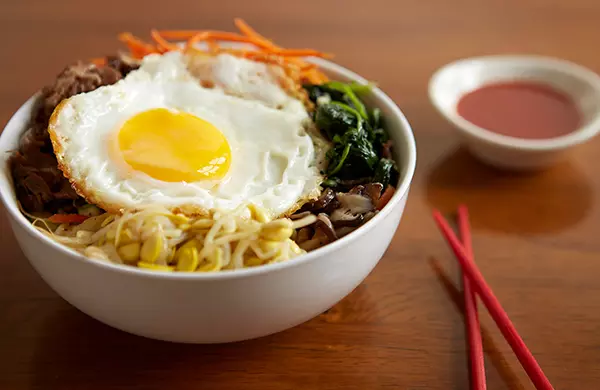
Now that you're familiar with this traditional meal, read on for a brief tutorial that will teach you how to eat bibimbap correctly.
1. Find a place that serves bibimbap (duh).
Ok, this seems obvious, but some Korean restaurants don't serve bibimbap. To find a place that does, click one of the links below and check out the menus for the dish (which may also be spelled "bi bim bop").
Cash Back Korean Deals | Korean Deals Under $30 | Korean Deals Near Me
2. Order it with the hot-stone bowl.
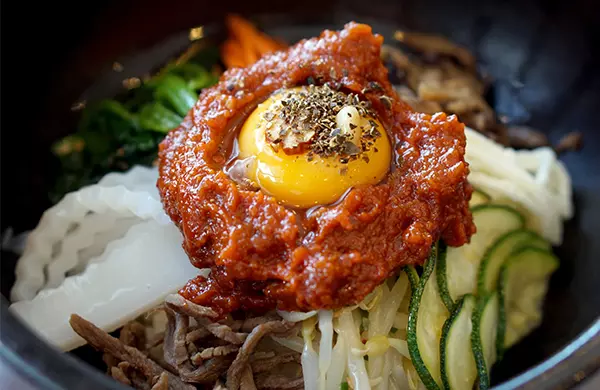
Many restaurants offer regular bibimbap and something called "dolsot bibimbap," which is a popular version of the dish, served in a piping-hot stone bowl that slowly cooks the ingredients and crisps the rice as you eat. It looks like this:
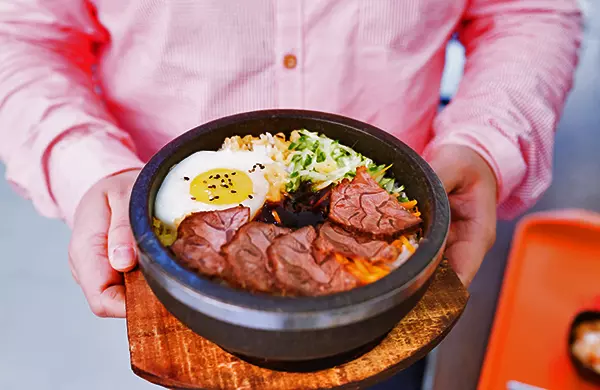
Ultimately, you can get either kind, but we prefer the dolsot bibimbap, because it keeps your meal hotter over a longer period of time.
3. Choose a spoon over chopsticks.
If you're really keen on using chopsticks, go ahead. Chopsticks are not customary, but they also aren't a huge faux pas, so you won't receive any dirty looks at the restaurant if you use them. When considering how to eat bibimbap, however, most Koreans prefer eating with a spoon. Not only is a spoon easier to control, but it helps you scoop up giant mouthfuls.
4. Add Gochujang chili paste or Sriracha.
Gochujang is a popular Korean condiment made with red chilies, fermented soybeans, glutinous rice, and salt. Gochujang is great for adding a burst of heat to any dish, but it also infuses food with a subtle sweetness and a dash of umami. It looks like this:
Most Korean restaurants will have gochujang available, but if not, Sriracha will work in a pinch. If you're not familiar with Sriracha, it's another chili-based red sauce with a dash of garlic. It's a little bit spicier than Gochujang, so be careful with it.
5. Drizzle on a bit of sesame oil.
Not every Korean restaurant will provide you with a side of sesame oil, as it isn't a crucial component of bibimbap. So if this happens, don't get upset and storm out of the dining room. But if you do get the chance to add sesame oil, you should do so. Adding a little drizzle of this oil —be careful, this stuff is potent—will impart a warm, nutty flavor and an instant wallop of that all-important umami.
6. Mix it all up.
This is by far the most important step. After all, bibimbap is Korean for "mixed rice," not "compartmentalized ingredients placed atop rice." So grab your trusty spoon (another reason spoons are preferable to chopsticks in this instance), stir away, and put some elbow grease into it.
Seriously, one or two half-hearted loops around the bowl won't suffice here. You'll know you've reached the perfect degree of mixedness when your once-kaleidoscopic, artfully assembled bowl of bibimbap starts to resemble a monochromatic porridge. It might seem like a shame at first, given the original presentation's beauty, but one bite will convince you it wasn't.
After you've mixed it up, you're ready to eat. Enjoy!