85%
6%
3%
1%
5%

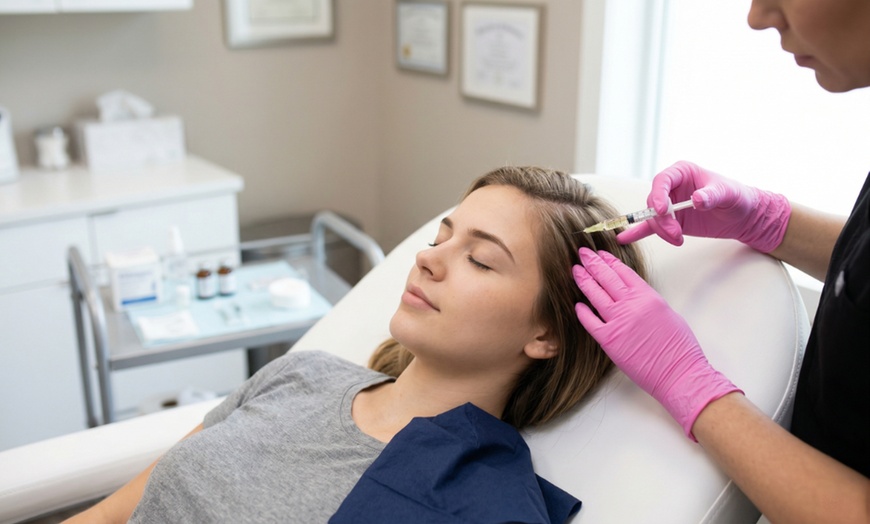
Experience natural hair restoration with PRP or PRF treatments, designed to stimulate dormant follicles for thicker, fuller hair!
Thinning hair can be a source of frustration, but a natural, non-surgical path to revitalized tresses awaits. These advanced Platelet-Rich Plasma (PRP) and Platelet-Rich Fibrin (PRF) treatments leverage the body's own regenerative power.
Thinning hair can feel like a losing battle, but the answer might already be flowing through your veins. Both Platelet-Rich Plasma (PRP) and Platelet-Rich Fibrin (PRF) are non-surgical, minimally invasive treatments that use your own blood to stimulate dormant follicles, increase hair density, and reduce shedding.
Whether you are looking for a tried-and-true classic or the next generation of regenerative medicine, these treatments offer a natural path to a fuller head of hair.
The Gold Standard for Scalp Revitalization
PRP has been the go-to treatment for hair thinning for over a decade. The process involves drawing a small amount of your blood and spinning it at high speeds in a centrifuge to isolate a concentrated layer of platelets. These platelets are packed with growth factors that, when injected into the scalp, act as a "fertilizer" for your hair follicles.
Best For
Early to moderate hair thinning, receding hairlines, and postpartum hair loss.
What to Expect
A series of quick injections into targeted areas of the scalp.
The Timeline
Most patients notice a significant reduction in shedding within 2–4 weeks, with visible thickness improving after 3–6 months.
Typical Regimen
An initial series of 3 to 6 sessions, spaced 4–6 weeks apart, followed by maintenance every 6–12 months.
PRF is often called "the second generation of PRP." By spinning the blood at a lower speed, the process preserves not just platelets, but also white blood cells, stem cells, and a fibrin matrix. Unlike PRP, PRF contains no anticoagulants or additives, making it a 100% natural concentrate.
The Fibrin Advantage
The fibrin forms a natural "scaffold" under the skin. Instead of a quick burst of growth factors, it releases them slowly over 7–10 days for more sustained healing.
Enhanced Potency
Because it contains stem cells and a higher concentration of platelets, it is often recommended for patients who want more intensive results or those who didn’t see the desired progress with standard PRP.
Typical Regimen
Many patients achieve their goals in fewer sessions—typically 2 to 4 treatments—spaced 4–8 weeks apart.
| Feature | PRP (Platelet-Rich Plasma) | PRF (Platelet-Rich Fibrin) |
|---|---|---|
| Composition | Pure Platelets & Plasma | Platelets, Stem Cells, White Blood Cells, & Fibrin |
| Additives | Uses anticoagulants to prevent clotting | 100% Natural (no additives or chemicals) |
| Growth Factor Release | Immediate, short burst | Slow, sustained release (over 7+ days) |
| Preparation | Fast, high-speed spin | Gentle, low-speed spin |
| Typical Sessions | 4–6 sessions for optimal results | 2–4 sessions often sufficient |
Both treatments are highly effective at slowing hair loss and encouraging new growth.
Choose PRP if you want a well-established, evidence-backed treatment that is often more budget-friendly and widely available.
Choose PRF if you prefer a completely natural process without additives, or if you are looking for a more "potent" treatment that stays active in the scalp for a longer period.