Pregnancy Massage by Trimester: When to Start, What Techniques to Use & How to Manage Pain at Every Stage
- Each trimester brings different discomforts — and different massage techniques work best at each stage.
- Most therapists recommend starting in the second trimester; sessions can increase from monthly to weekly as your due date approaches.
- Swedish massage is the safest default technique for pregnancy, but myofascial release and lymphatic drainage are also effective when modified.
- Specific pregnancy pains like sciatica, carpal tunnel, and round ligament pain each respond to targeted massage approaches.
- At-home techniques between professional sessions can extend the benefits and reduce overall cost.
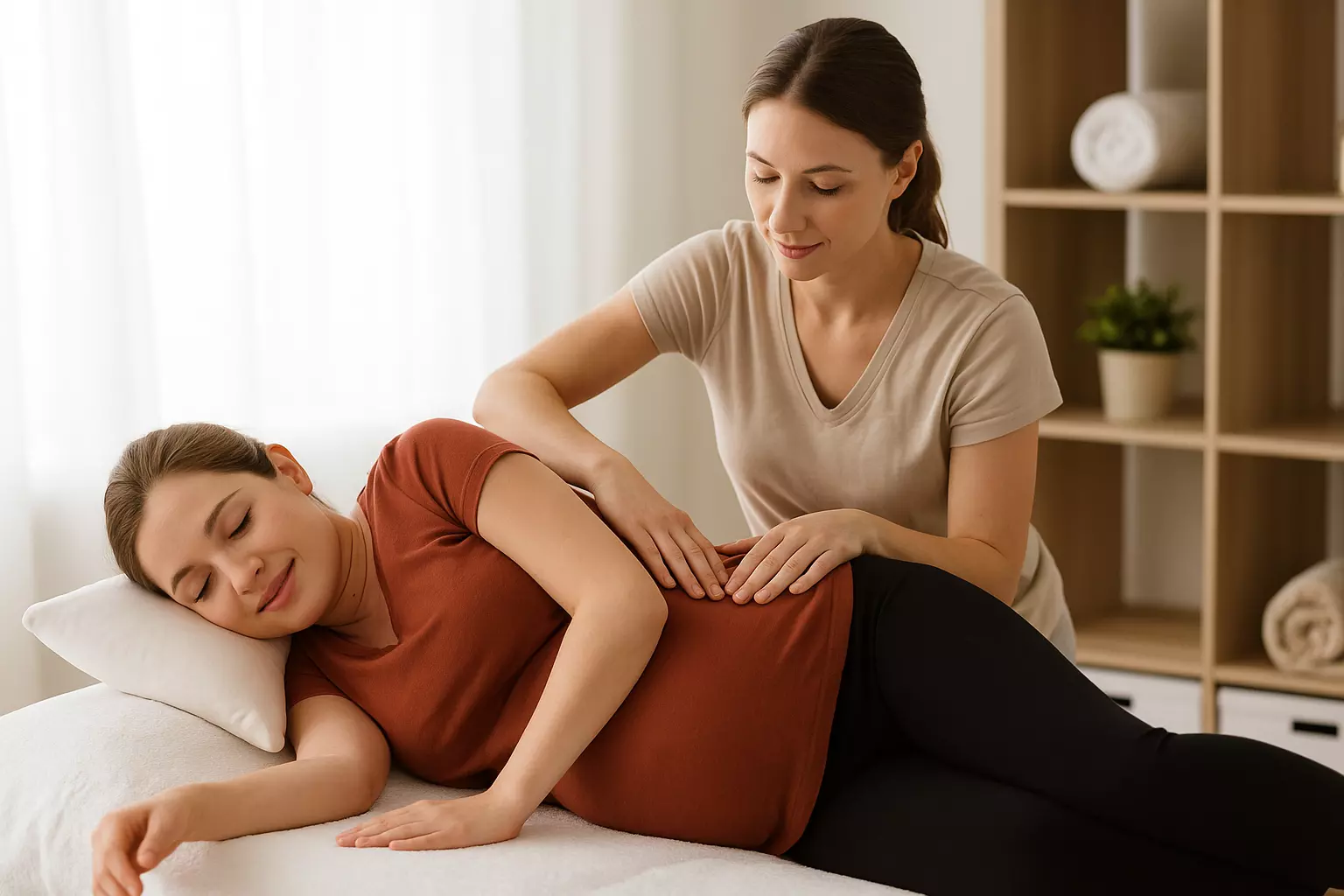
You already know that prenatal massage is safe and beneficial — but when exactly should you start? Which techniques are best for second-trimester back pain versus third-trimester swelling? And how do you build a realistic massage schedule that doesn't blow your budget?
This guide breaks down pregnancy massage stage by stage, with specific guidance on what your body needs at each phase, which techniques to ask for, which pains respond best to massage, and practical at-home methods to use between professional sessions.
Massage Techniques That Are Safe During Pregnancy
Not every massage style is appropriate when you're expecting. Here's a quick breakdown of what's on the table — and what's off-limits.
✅ Safe Throughout
Swedish massage — gentle flowing strokes, the gold standard for pregnancy.
Lymphatic drainage — light rhythmic strokes that reduce swelling.
Craniosacral therapy — ultra-gentle technique for headache and tension relief.
⚠️ With Modifications
Myofascial release — effective for chronic tension when done gently.
Trigger point therapy — useful for sciatica and back knots at reduced pressure.
Reflexology — foot-focused; some points must be avoided during pregnancy.
🚫 Avoid During Pregnancy
Deep tissue massage — too much pressure, especially risky on legs.
Hot stone massage — raises body temperature, not recommended.
Sports massage — intense techniques not appropriate for a pregnant body.
Ask before you book: When scheduling, confirm that the therapist is specifically trained in prenatal techniques — not just offering their standard Swedish session to a pregnant client. A trained prenatal specialist understands the anatomical and hormonal changes at each stage and adjusts accordingly.
First Trimester (Weeks 1–12): Proceed with Caution
🤰 What's Happening to Your Body
Hormone levels are surging, which can cause fatigue, nausea, headaches, and breast tenderness. You may not look pregnant yet, but your body is already working overtime. Many women experience their first bouts of lower-back discomfort as relaxin begins loosening ligaments.
Massage Guidance
Most certified prenatal therapists won't schedule sessions during the first trimester — not because massage is proven harmful, but because the naturally higher miscarriage rate during this period creates a liability concern. The American Pregnancy Association notes that some therapists will accept first-trimester clients with a doctor's release.
If you do get clearance, expect very light pressure focused on the head, neck, shoulders, and upper back. The abdomen, lower back, and legs are typically avoided entirely this early.
Second Trimester (Weeks 13–27): The Ideal Starting Point
🤰 What's Happening to Your Body
The "golden trimester" is when most women feel their best — morning sickness often subsides, energy returns, and the bump is growing but manageable. However, your center of gravity is shifting, placing new strain on the lower back, hips, and pelvis. Round ligament pain (sharp twinges on the sides of the abdomen) is common, and some women begin experiencing sciatica as the uterus puts pressure on the sciatic nerve.
Best Techniques for This Stage
This is the prime window to establish a regular massage routine. Swedish massage at light-to-medium pressure is ideal, with focus on the lower back, hips, and glutes where tension is building. If sciatica is present, gentle trigger point work on the piriformis muscle can provide significant relief. Side-lying positioning becomes standard from this point forward.
Monthly sessions are typically sufficient during the second trimester, serving as both treatment and prevention. This is also when to start with a therapist so they can establish a baseline understanding of your body before the third trimester ramps up.
Third Trimester (Weeks 28–40): Maximum Relief When You Need It Most
🤰 What's Happening to Your Body
Everything intensifies. The baby is gaining weight rapidly, pushing your diaphragm upward (hello, shortness of breath) and compressing pelvic blood vessels (hello, swollen ankles). Lower-back pain is at its peak, sleep is increasingly elusive, and carpal tunnel symptoms — yes, that can be pregnancy-related — may appear as fluid retention puts pressure on the median nerve. Braxton Hicks contractions add another layer of physical tension.
Best Techniques for This Stage
This is when massage arguably provides the most dramatic relief. Sessions should use exclusively light pressure with extended focus on the lower back, hips, legs (gentle strokes only), and feet. Lymphatic drainage is particularly valuable now for managing edema in the lower extremities. Some therapists incorporate gentle stretching and breathing exercises to help prepare the body for labor.
Most women benefit from increasing to biweekly sessions around week 28 and weekly sessions from week 36 onward. The cumulative stress-hormone reduction from consistent massage may also contribute to better labor outcomes.
Third trimester caution: Pressure points near the inner ankles (specifically SP6, or Sanyinjiao in acupressure) are thought to potentially stimulate uterine contractions. A certified prenatal therapist will know to avoid these, but it's worth mentioning if you're visiting a new provider for the first time late in pregnancy.
Targeting Specific Pregnancy Pains with Massage
Different aches and pains respond to different approaches. Here's what to ask your therapist to focus on based on your symptoms.
| Pain / Symptom | Common Trimester | Massage Approach | Complementary Relief |
|---|---|---|---|
| Lower back pain | 2nd & 3rd | Swedish strokes on paraspinal muscles; gentle sacral release | Prenatal yoga, belly band support |
| Sciatica | 2nd & 3rd | Gentle trigger point work on piriformis; glute release | Pigeon pose, tennis ball against wall |
| Round ligament pain | 2nd | Light myofascial release on hip flexors and lateral abdomen | Side-lying with pillow between knees |
| Swollen feet & ankles | 3rd | Lymphatic drainage on lower legs; gentle foot massage | Elevation, compression socks, hydration |
| Pregnancy carpal tunnel | 3rd | Forearm and wrist myofascial work; gentle stretching | Wrist splints at night, ice packs |
| Headaches & neck tension | 1st & 2nd | Craniosacral therapy; neck and shoulder Swedish work | Hydration, screen breaks, magnesium |
| Insomnia | All trimesters | Full-body relaxation massage with focus on scalp and feet | Body pillow, warm bath, consistent bedtime |
At-Home Massage Techniques Between Sessions
Professional sessions are ideal, but you can extend their benefits significantly with simple at-home techniques. These are safe for all trimesters (after the first) and require no special equipment.
Tennis Ball Wall Roll
Place a tennis ball between your back and a wall, positioning it on the tight muscles alongside your spine (not on the spine itself). Lean into it gently and roll up and down by bending and straightening your knees. This provides targeted pressure on paraspinal muscles without requiring you to get on the floor. Spend 2–3 minutes per side.
Seated Figure-4 Piriformis Release
Sit on a firm chair and cross one ankle over the opposite knee. Lean forward gently until you feel a stretch in the outer hip and glute. For added release, use your thumb to press gently into the center of the glute where the piriformis sits. Hold for 30 seconds per side. This is particularly effective for sciatica relief.
Frozen Water Bottle Foot Roll
Roll the arch of your foot over a frozen water bottle while seated. The cold helps reduce swelling while the rolling action releases tension in the plantar fascia. This provides dual relief for swollen, aching feet — especially effective in the third trimester after a day on your feet.
Partner Shoulder & Neck Circuit
Have your partner use their thumbs to make slow circles at the base of your skull, then work outward along the tops of the shoulders using gentle kneading. This is one of the safest areas for an untrained person to massage and can relieve the neck and headache tension that builds from postural shifts. Use coconut or jojoba oil for smoother glide. Avoid deep pressure on the lower legs and abdomen.
Building an Affordable Pregnancy Massage Routine
Regular massage throughout your second and third trimesters is ideal — but at $75–$150 per session, the cost adds up fast. Here's what a typical schedule might cost and how to keep it manageable.
The hybrid approach — alternating professional sessions with at-home techniques — is the most cost-effective way to maintain consistent relief. Use Groupon deals for the professional sessions and fill the gaps with the at-home methods above. Some therapists also offer multi-session packages at a reduced per-visit rate, which you can sometimes stack with a Groupon discount.
HSA/FSA tip: Prenatal massage may be eligible for reimbursement through your health savings or flexible spending account if your provider writes a letter of medical necessity. Check with your plan administrator — this is an often-overlooked way to offset the cost.
💆 Start Your Prenatal Massage Routine for Less
Groupon partners with certified prenatal massage therapists in cities across the country, with deals that typically save 30–50% off standard rates. Whether you're booking your first second-trimester session or ramping up to weekly visits before your due date, starting with a deal makes it easier to commit to a consistent schedule.
Postpartum: Don't Stop After Delivery
Your massage routine shouldn't end when the baby arrives. The postpartum period brings its own set of physical demands: recovering from labor (or a C-section), adjusting to breastfeeding posture, and managing sleep deprivation. Postpartum massage helps with residual pelvic and back pain, reduces swelling, relieves neck and shoulder strain from feeding, and supports overall recovery.
Most women can begin postpartum massage within 10–14 days of a vaginal delivery, or 4–6 weeks after a cesarean. Many prenatal therapists offer postnatal sessions and welcome babies in the room — some even have stroller parking next to the table. Sessions every 2–4 weeks for the first three months can make a meaningful difference in your recovery.
Prenatal vs. Labor Prep vs. Postpartum Massage
These three types of pregnancy-related massage serve different purposes and are offered at different stages. Here's how they compare.
| Type | When | Goal | Key Techniques |
|---|---|---|---|
| Prenatal massage | Week 13 – delivery | Pain relief, stress reduction, circulation, sleep | Swedish, lymphatic drainage, gentle myofascial release |
| Labor prep massage | Week 39+ | Encourage uterine activity, reduce anxiety, prepare body | Acupressure (SP6, LI4), reflexology, essential oils, stretching |
| Postpartum massage | 10 days – 3 months after birth | Recovery, pain relief, hormonal balance, feeding-posture strain | Swedish, deeper tissue work (once cleared), scar tissue work for C-section |
Good to know: Labor prep massage is a specialized service — not all prenatal therapists offer it. If you're interested, ask specifically about acupressure-based labor preparation and confirm your provider has experience with this approach. It should only be done after 39 weeks with your OB-GYN's approval.
Choosing the Right Massage for Your Stage
Establishes a baseline with your therapist. Ask for focus on shoulders and lower back.
Longer sessions allow time for both full-body relaxation and targeted glute/piriformis release.
Weekly sessions provide cumulative benefit. Pair with elevation and compression socks at home.
Professional every other week, partner and self-massage between. Total cost: roughly half of full-schedule pricing.
Frequently Asked Questions
Can you get a massage in the first trimester?
Technically yes, but most certified prenatal therapists prefer to wait until after week 12. The first trimester carries a higher natural risk of miscarriage, and while there's no evidence that massage causes miscarriage, many providers require a doctor's release for sessions before the second trimester.
What type of massage is best during pregnancy?
Swedish massage is the gold standard — gentle flowing strokes at light-to-medium pressure that relax muscles and improve circulation without risk. Lymphatic drainage is also excellent for managing swelling, and modified myofascial release can help with chronic tension spots. Avoid deep tissue, hot stone, and sports massage.
Is it safe to get a massage at 36 weeks pregnant?
Yes, for healthy pregnancies. Many women actually increase their massage frequency to weekly sessions in the final month to manage peak discomfort. Keep working with your certified prenatal therapist, maintain OB-GYN clearance, and communicate any new symptoms at each session.
What areas should not be massaged during pregnancy?
Certified therapists avoid deep pressure on the legs (blood clot risk), the abdomen (light touch only, if at all), and specific acupressure points near the inner ankles (SP6) and wrists (LI4) that may stimulate uterine contractions. Lying flat on the back is also avoided after the first trimester.
Can massage help with sciatica during pregnancy?
Yes — it's one of the most effective non-pharmaceutical options. Gentle trigger point work on the piriformis muscle and surrounding glute tissue can relieve the compression on the sciatic nerve. Many women find the best results from combining massage with prenatal yoga stretches like pigeon pose.
How is third trimester massage different from second trimester?
Third trimester sessions use lighter pressure overall, more careful positioning, and shift focus toward the lower extremities where swelling is worst. Lymphatic drainage becomes more prominent, and some therapists introduce breathing techniques and gentle stretches to prepare the body for labor. Extra caution is taken around the legs and labor-related pressure points.
Can my partner give me a prenatal massage at home?
Absolutely. Focus on safe zones: shoulders, upper back, neck, and feet. Use gentle pressure with a pregnancy-safe oil like coconut or jojoba. Avoid deep pressure anywhere on the legs, skip the abdomen, and steer clear of the inner ankle area. Even untrained touch from a loved one can boost serotonin and dopamine levels.
What is the difference between prenatal massage and labor prep massage?
Prenatal massage is ongoing wellness care — pain relief, relaxation, and circulation support. Labor prep massage is a specialized session done near the due date (typically after 39 weeks) that targets acupressure points and uses reflexology techniques thought to encourage uterine activity. Labor prep requires separate OB-GYN approval and is not offered by all therapists.

