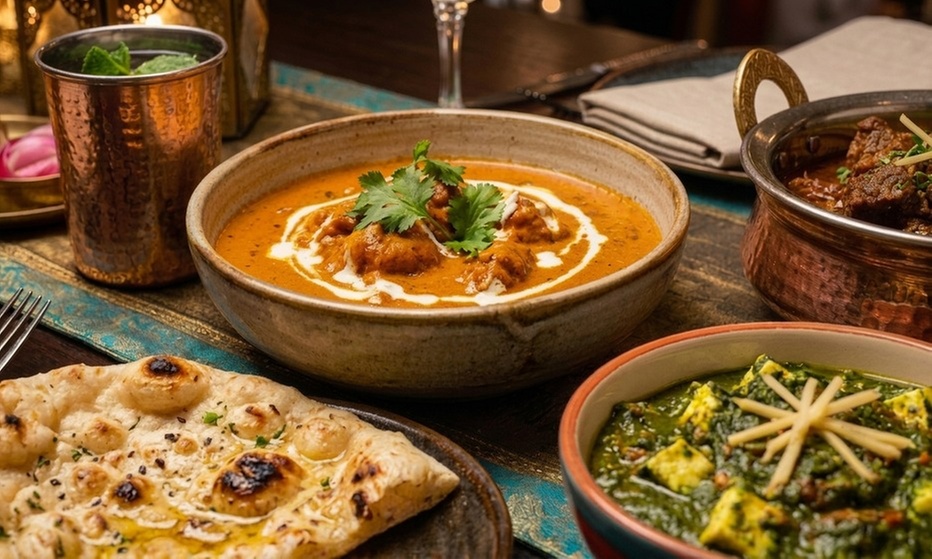
Indian Food for Beginners: A Menu Guide for First-Timers
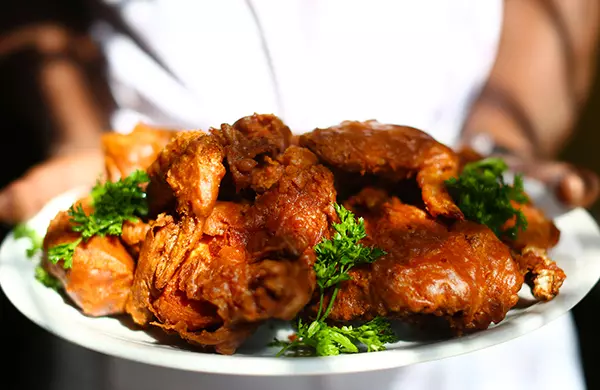
According to a Washington Post article, there were only about 5,000 Indian restaurants in the United States as of 2015, making it one of the least popular types of ethinic cuisine in the country. That's likely to come as a huge surprise to fans of the fragrant style of cooking, which is known for its liberal use of spices, rich sauces, and unique commingling of flavors.
Of course, part of the reason Indian food isn't more popular is simply that so many people have yet to try it. Indian food, for beginners, can seem a bit intimidating, especially if you're unfamiliar with the dish names, the regional styles, and some of its ingredients. And so, we've thrown together this handy beginner's guide to Indian food to help first-timers discover a life-long love for this most under-appreciated cuisine.
What makes Indian food unique?
Indian dishes have a well-deserved reputation for featuring complex flavor profiles. Some of this is due to the cooking style's generous use of spices (it's not uncommon for some dishes to have as many as 25 or 30 different spices), but that's only part of the equation. Most Indian cooks adhere to an Ayurvedic principle that says that every dish should contain six key elements of taste: sweet, sour, salty, bitter, pungent, and astringent. That means that, in any given dish, you'll experience all those flavors at once.
Is Indian food spicy?
Spices are big in Indian cooking, but spiced doesn't always necessarily translate to spicy. While it's true that you can find plenty of fire in some Indian entrees, there are plenty of dishes to suit those who can't stand the heat. And, perhaps, more importantly, most restaurants are used to accommodating Western palates. If you're unsure how spicy a dish is, simply ask and request that the kitchen prepare you a milder version.
How to read an Indian food menu
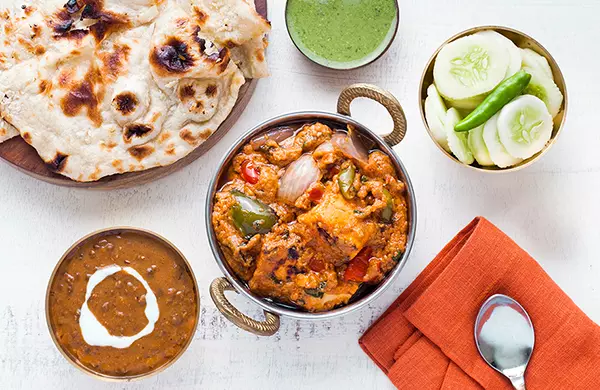
If you've never eaten Indian food before, you might only be familiar with one dish: curry. But curry is actually a style of cooking, and any Indian restaurant is likely to have a vast number of different curries, each containing different ingredients and flavor profiles. And what about other terms you're less familiar with such as daal, paakora, and lassi?
Below, we threw together some quick definitions of some of the more common Indian menu items, so you can prepare ahead of time.
Basic Terms
- Tandoori: a dish baked in a tandoor, or clay oven
- Curry: a fairly loose term applied to any dish (meat or vegetarian) made using a complex blend of spices and herbs and featuring a rich sauce, typically served with rice
Entrees
- Daal: daal or dal is a legume-based stew that can be made with peas, lentils, or chickpeas. The stew is thick and typically served with bread
- Dosa: think of dosa as a sort of Indian crepe. The thin pancake is made from fermented rice batter and often served with vegetarian dishes
- Saag: a spiced blend of spinach and other greens
Sides & Sauces
- Samosa: a fried turnover-type pastry. Samosas can be stuffed with meat or vegetables; spiced potatoes are a common filling
- Biryani: rice-based dish featuring a melange of ingredients that might include meat, vegetables, and spices. It's not out of the question to think of biryani as India's answer to fried rice.
- Naan: a popular side dish, naan is a pillowy Indian flatbread baked in a clay oven.
- Chutney: a popular condiment made with fruits and/or vegetables, featuring a consistency similar to relish; typically sweet, but can be savory, sour, or spicy
- Raita: a smooth, sauce-like condiment made from yogurt, cucumber, and herbs such as mint. It provides a cooling complement to spicy main courses, but may also be used as a dip or dressing.
- Lassi: this cool and creamy drink is made with yogurt, water, and spices, and often comes in fruit flavors. Mango lassi is perhaps the most common option.
Common Ingredients & Spices
- Masala: this term simply means "spice mixture"; however, it typically refers to garam masala, which is a blend of pepper, cloves, cinnamon, nutmeg, and cardamom
- Paneer: a type of cheese similar to farmer's cheese, paneer is often cut into cubes and used as an ingredient in curries
- Aloo: potato
- Chana: chickpeas
What Are the Different Types of Indian Food?
India is a huge continent and, as such, there are many many different styles of Indian cooking. When choosing an Indian restaurant, be sure to inquire as to what style of Indian cooking they specialize in. You could easily break down Indian cooking techniques into as many as 34 different regional styles, but here in the states, you're likely to find two distinctions: Northern Indian vs. Southern Indian.
Northern Indian Cuisine
Complex spice mixes, dairy products, and tandoori-oven baked dishes are the hallmarks of Northern Indian cooking. Because a lot of wheat is grown in North India, Northern Indian restaurants typically offer an array of oven-baked breads, including naan, roti, and paratha. There is also a heavy Persian influence in Northern Indian cooking, and the spiciness of many dishes is tempered by a liberal use of butter, cream, and ghee.
Southern Indian Cuisine
Spicy, vegetarian dishes are much more the focus of Southern Indian cooking. Dishes from this region are less likely to use butter or milk, but more likely to feature coconut. The biggest difference between Northern and Southern Indian food, however, is that Southern cuisine favors rice over wheat-based starches. While Southern Indian dishes are less likely to feature meat, they are more likely to feature seafood.
Which dishes are best for beginners?
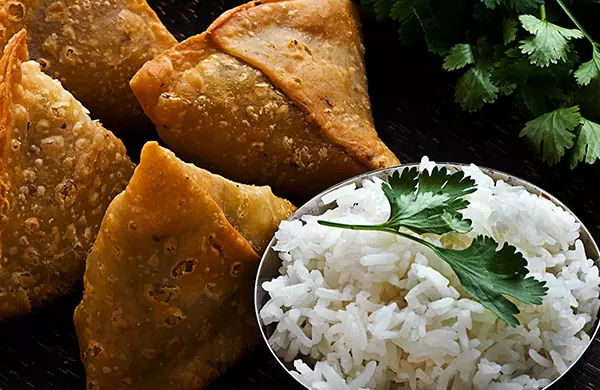
Still feeling intimidated? The following dishes are standard at most Indian restaurants and won't intimidate western palates.
- Chicken tikka masala: chicken cooked in a spicy tomato sauce flavored with masala spices.
- Daal tadka: yellow lentil soup flavored with garlic and ginger
- Lamb vindaloo: a hot lamb curry made with lots of chili peppers (spicy food-lovers only)
- Chana masala: a tangy curry made of chickpeas in a masala-based sauce
- Saag paneer: spiced, cooked spinach tossed with cubes of fresh cheese
How Do You Choose a Restaurant?
- Visit one of the best places like: Chutney Masala Indian Bistro or Lungi
- Choose one of Groupon's Best Trending Deals:
- Long Island: Enjoy Indian Cuisine with $40, $65, or $100 for Dine-In, Takeout, or Delivery at The Curry Club
- Washington: Discover India's Flavors: $30 or $60 Toward Indian Cuisine Dinner at Minerva Indian Cuisine
- Central Jersey: Endless Indian Flavors at Shahnawaz Palace w/ All-You-Can-Eat Buffet for One, Two or Four